2026-11-23 · Rick Donovan
How Tallahassee Humidity Strains AC Units During Peak Summer
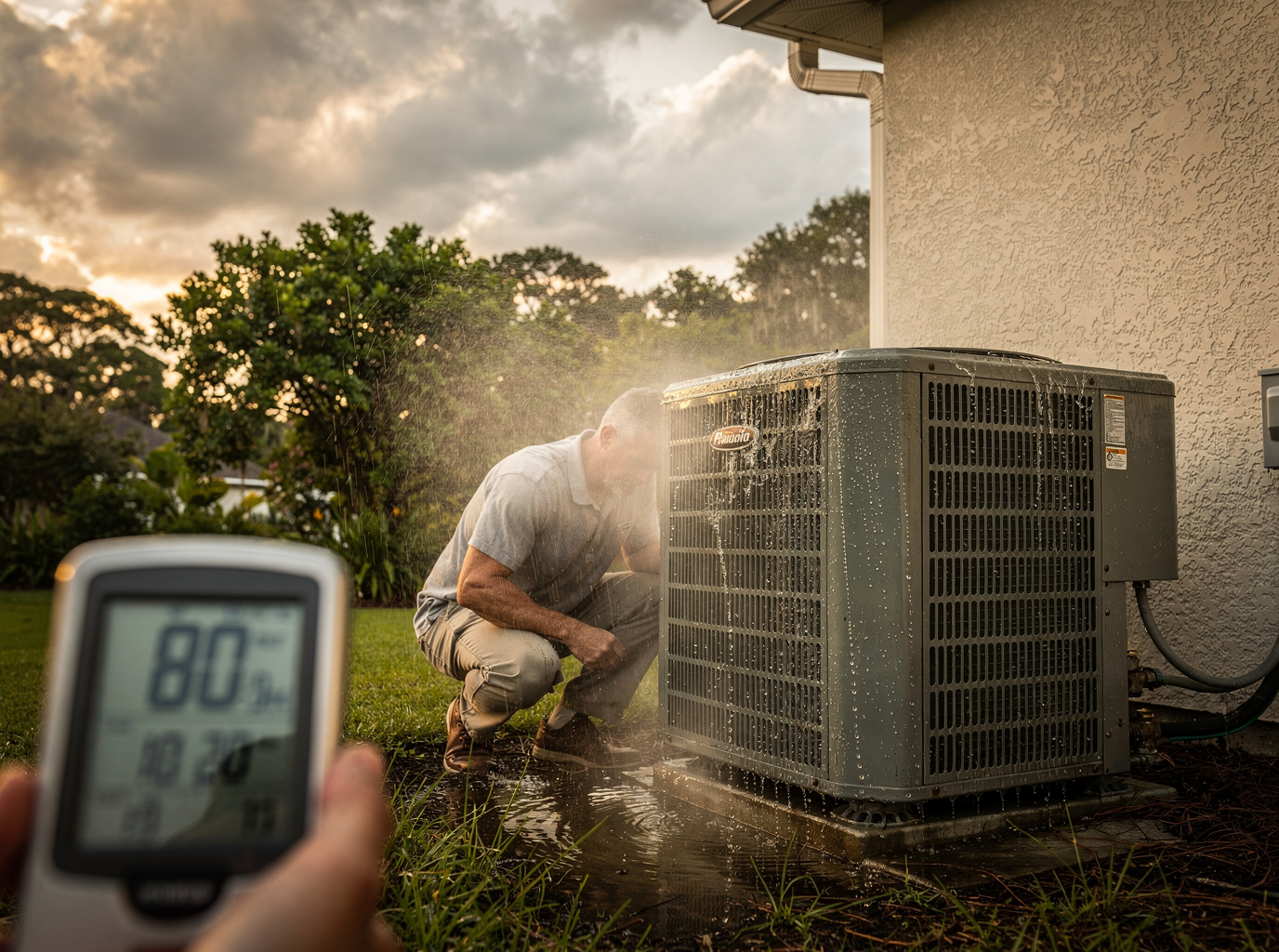
Tallahassee humidity forces AC units to run 20-30 percent longer cycles during July and August peaks because the system must remove both sensible heat and large volumes of moisture before indoor temperatures drop. In Leon County the air often holds 70-80 percent relative humidity even after sunset, so evaporator coils stay wet for hours and ice can form when airflow drops.
How Moisture Loads Affect Evaporator Coils
Tallahassee's hot, humid summers keep outdoor dew points above 70 degrees for weeks, so indoor coils must pull gallons of water from the air every hour. When condensate drains clog from pollen or mold common near the Florida State Capitol and Doak Campbell Stadium, water backs up and reduces heat transfer. Older homes in Downtown and College Town often have smaller return ducts that cannot move enough air across the coil, causing the temperature to fall below 40 degrees and ice to build. Newer construction in Southwood uses larger filters that clog faster in high pollen counts, cutting airflow by 15-20 percent within one season. Technicians see frozen coils most often on units serving single-story ranch homes built in the 1970s around Midtown where insulation is minimal and ductwork sits in hot attics.
Run Times and Energy Strain in Peak Months
Peak summer afternoons push outdoor temperatures above 92 degrees while humidity stays near 75 percent, so systems in Killearn Estates and Southwood run 10-12 hours daily instead of the 6-8 hours common in drier regions. The compressor stays under constant load because the thermostat never reaches setpoint until moisture levels fall. This extended operation shortens the life of capacitors and contactors, parts that already face corrosion from salt air drifting inland from nearby Panama City. Homes near St. Marks National Wildlife Refuge see even higher moisture because prevailing winds carry additional humidity from the coast. Power bills rise sharply when the unit cannot shed latent heat efficiently, and homeowners notice rooms staying clammy even when the thermostat reads 74 degrees.
Neighborhood Differences Across Leon County
Downtown and Midtown homes built before 1980 often have metal ductwork in crawl spaces that sweat heavily, dripping onto insulation and lowering efficiency. College Town rentals near Florida State University see frequent filter changes because student traffic brings extra dust that mixes with humidity and cakes on coils. Southwood and Killearn Estates properties, mostly built after 2000, use 14-16 SEER units that still struggle when tree pollen from surrounding pine stands coats outdoor fins. The flat terrain means little natural drainage, so standing water around condensers in low-lying spots near the Florida State Capitol raises humidity further and accelerates rust on cabinets. These local patterns mean service calls spike after any stretch of 90-plus degree days with afternoon thunderstorms.
Steps That Reduce Humidity Strain on Local Units
Homeowners can cut strain by scheduling AC maintenance before June so coils are clean and drains are clear before the worst humidity arrives. Replacing 1-inch filters every 30 days during summer prevents the airflow loss that leads to icing. Setting the fan to run 5-10 minutes after the compressor stops helps evaporate remaining moisture on the coil. When problems persist, AC repair technicians check refrigerant levels because low charge makes the coil even colder and more prone to ice. Readers facing repeated issues can review what influences AC repair pricing in North Florida neighborhoods to understand cost factors tied to older duct systems common in Tallahassee.